Birding Adventures

Paddy Cunningham
1653 Plunkett St.
Hollywood, Florida 33020
birdpaddy@yahoo.com
(954) 926-5458


Birding Adventures in Panama

Eastern Shore of Virginia
DelMarva Peninsula


HomeAbout UsScheduleBird ListReviewsFeesContact Us
Outstanding AdventuresEverglades FestSouth FloridaCosta RicaPanamaVirginia

Eastern Shore of Virginia
October 8-13, 2008


EASTERN SHORE - DELMARVA PENINSULA
September 28 - October 2, 2006
Total species: 117

Imagine a place where you can see 200 migrating songbirds, hold a Gray-cheeked Thrush in your hand as Northern Flickers and kettles of Hawks fly over head and all at that same time? This is not only possible but almost an everyday occurrence at the end of the Delmarva Peninsula at Kiptopeke State Park during fall migration. It is an amazing and wonderful place. I was overwhelmed and enchanted with it's raw beauty, great birding opportunities and wonderful seafood (more about that later).

The Eastern Shore is located on the Delmarva peninsula (Del-Delaware, Mar-Maryland, Va-Virginia). It is found between the Atlantic Ocean and the incredible Chesepeake Bay. The area is famous for its' Crab Cakes and Misty of Chincoteque (a story about wild ponies). I think it should become famous as a great fall migration spot. As one birder I met said of the other fall migration bird Mecca-Cape May, New Jersey, "Oh, you will have small intimate bird groups of 10-20 people at bird banding and Hawk watch sites. Yah-200 groups of 10-20 people." Cape Charles, Virginia which was close to all the major birding spots in the area was uncrowded, very friendly and in a great contrast to Cape May, inexpensive. It is about a 5 hour drive from Washington D.C.

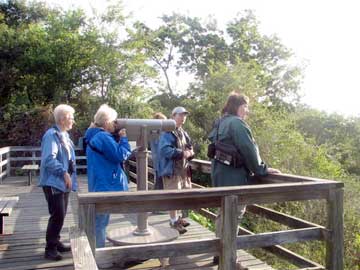
The Delmarva peninsula like Cape May are great spots for birding during fall migration. As hawks and songbirds travel south, these land forms surrounded by water act as a funnel channeling the birds to the end of the peninsula. The birds seeing the open expanse of water will at times back up or fall out before heading south, causing large concentrations of birds to be found in a small area. The Hawk Watch organization has placed a counting station there in a open area within Kiptopeke State Park. Professional Biologists as well as many dedicated volunteers man the Hawk Watch from mid-September through November. According to counters at Kitopeke Hawk Watch, the amount of migrating raptors are similar to those at Cape May and most are the same birds. The Virginia Wildlife Observation also has a bird banding station,which amazing. They are open to public and you can feel free to interact with those counting, asking questions about what is being seen and maybe find a few hawks yourself.

DAY 1

We started out our trip in D.C. at Huntley Meadow Nature Center in Alexandria. It is a mixed forest with a large marsh. It has a wonderful boardwalk and consistently produces rare birds for an urban area. Birds seen only here for the trip included American Goldfinch, Song Sparrow, and Marsh Wren. We headed to the coast with a stop for crab cakes with a scenic view of a fishing harbor. Hawk migration was in full swing and we saw Bald Eagle, Red-tail Hawks and other raptors along the way. It was late afternoon we when made it to the coast so we rushed to the Eastern Shore of Virginia National Wildlife Refuge before dark. The bird blind marsh was a disappointment with no water for ducks but we saw a Commmon Yellowthroat.

DAY 2

A severe storm had passed through during the night so we had high hopes and were excited to be going to our first bird banding. There was very little being captured and we came to realize that warblers and songbirds would be there the next day. So we headed to the E.S. of V.N.W.R. and walked the trail phishing for warblers and saw Blue-grey Gnatcatchers. At the observation tower Sharp-shinned and Coopers Hawks flew overhead. At the trail end was a beautiful view of a tidal salt marsh with calls from Clapper Rails. I love salt marshes. We added many wading bird species and the trees nearby had a Red-eyed Vireo and Ovenbird. The highlight of the day was the walk to the Intracoastal were we saw flocks of terns and wading birds, but no Clapper Rail on the mud edges. Overhead were kettles of Coopers, Sharp-shinned, and Broadwing Hawks. This was the sight we had come to see and also observed Peregrine Falcon and Merlin speeding by. The winds of the front brought the hawks along with it, but it was still to windy for the songbirds! In the pond along the road were American Black Ducks which a life bird for many.

After lunch it was off to the state park were we walked the trails down a big bluff and out to the bay adding woodpeckers and mosquito bites. We were had hopes of Great Commorant. Dream on. With not much happening we decided to go out to Chesapeake Bay Bridge-Tunnel (CBBT). It was frustrating because we were not able to stop along the bridge and Fisherman Island was filled with hundreds of shorebirds (mostly Willets and Dowitchers) and Black Skimmers. There is a brief overlook at the northern toll booth were we spotted Osprey and Sanderling. I recommend that you stop at the island #1 where the pier is. We saw Ruddy Turnstones and American Oystercatchers very close, as I searched the wave crashed rocks for but did not find a Purple Sandpiper. There were many Greater Black-backed and Herring Gulls and an uncommon look at an immature Yellow-crowned Night Heron. Don't be too hopeful for pelagic in that I would guess they appear only during weather events. The continental shelf is 50 miles out to sea, too long a boat ride for me.

DAY 3

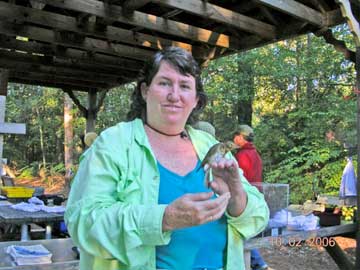
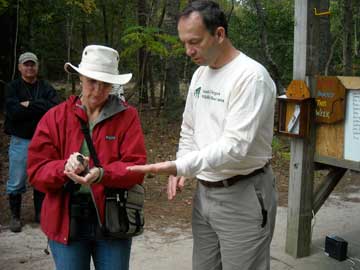
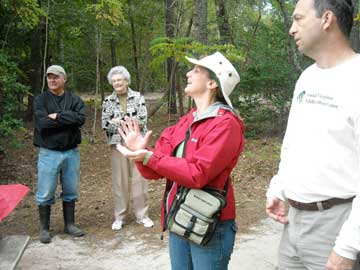
We rushed to see the results of the first run at Kiptopeke S.P. and were surprised with Veery and Swainson's Thrush (a bird we saw by the hundreds in Costa Rica), Cape May and Magnolia Warblers. Seeing these beautiful birds so close and even being able to hold them in your hand was an exhilarating but humbling experience. It brought tears to my eyes as I felt the rapid heart beat and feather-like weight of a Black-throated Blue Warbler that would soon cross the mighty ocean and travel all the way to Central and South America. The volunteers were great allowing anyone to hold and release the birds. They took the time to identify each bird for the viewers and gave out field marks for future identification. We were like kids at Christmas waiting to open up gifts to see what was in each of the cheesecloth bags. It is very addicting watching Jethro, the Wildlife Biologist so quickly and nimbly measure tail, wing, back and skull to determine the age. They are weighed and a band is placed around it's leg and then it is set free. Depending on how many birds they capture in each run, you can bird the general area which includes a pine/mixed forest, open shrub area, field and butterfly garden.

The closest lunch and grocery store is at least a 15 minute drive, but it was on the way as decided to spend the afternoon checking out other spots described in the ABA-A Birder's Guide to Virginia by David W. Johnston. We drove road 600 to search the fields for shorebirds. Along the way we saw Eastern Meadowlark and Indigo Buntings. We visited the quaint town of Oyster which had a circular harbor where we found Snowy Egret and Browned-headed Cowbird. It has the atmosphere of a New England fishing village, but with the long history of Virginia coastal southern charm. When we pulled up a fisherman was unloading the crabs off his boat while Ring-billed Gulls and Royal Tern squawked. We were invited for a pot luck at the Methodist Church who was having a 100 year old celebration, but we settled for the best chocolate chip cookies from their bazaar. We visited a stately plantation and were blessed with a fallout of 20-30 Willow and Alder Flycatchers frantically feeding. Yes we spend a half hour trying to tell them apart and had to identify them as the book says by their calls of which we heard both.

DAY 4

The early run brought close views of some rare birds including 2 Connecticut Warblers, where excited birders got to see it's bill and larger size. I examined closely the faint yellow eye line and wingbars of the Tennessee Warbler and sparse black hood on a female Hooded Warbler. We saw the orange wing bars on the uncommon juvenile Blue-Grosbeak. The most vocal and active birds are the Catbirds who flutter and fight and many were caught . This is an incredible opportunity for birders and a wonderful way to monitor bird migration and mortality through this essential research.

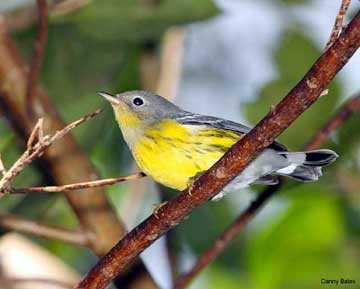
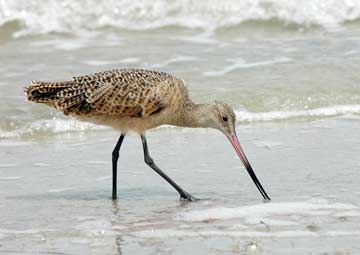
With a rainy morning we switch gears and headed one hour north to Chincoteague National Wildlife Refuge and Assateague National Seashore. Although famous for its wild ponies, it is a top birding spot in Virginia and along the Eastern Shore. It is a major stopover destination for shorebirds and wintering waterfowl. We saw the resident Brown-headed Nuthatches and Delmarva squirrel which it's frosty gray fur on the Woodland trail. The wildlife drive is open all day but to cars only after 3 p.m. We saw a good collection of ducks including real Mallards, Northern Pintails, Northern Shovelors, Green-winged Teals and others. We were just alittle to early for the Snow Geese and bay ducks. The Swan Cove on the way to the shore was teeming with Willets and a lone Marbled Godwit. A Hudsonian Godwit (which would of been a life bird for me) had everyone in a twitch but we had no luck. But the luck I did have which I hope in the future will become a state record was the sighting of a full breeding male Kirkland's Warbler next to the A.N.S. visitors center. It was in a mixed flock and had the black spots (not streaks) on a bright yellow breast. It was very tame as mentioned in the literature and came very close with phishing. I eliminated it from being a female Magnolia which has spots, because the bird was not a duller brown and no white patches on tail and wings. It was very dark gray with black streaks on the back and a faint eye ring. I tried to talk myself out of it for 2 months, but everything I saw and read kept leading me back to the Kirklands. Wow!!

Day 5

Last time for the bird banding station and it's visual treasures. The butterfly garden and scrubby shrub area on the way to the birding station throughout our visit had produced numerous warblers, vireos, Indigo Buntings and even a Brown Thrasher. During a early morning fallout I observed at one time more than 200 birds in the surrounding trees and bushes with Northern Flickers flying directly overhead one a minute. The Eastern Shore and Kiptopeke State Park had delivered all that was hoped for and much more and in such a short driving distance from the hotel.

We stayed at the Kiptopeke Inn which was in the process of remodeling, nothing fancy but very clean rooms and friendly staff. The Inn is located right next to the state park which made it very convient. They call themselves the "Fisherman Paradise" which is great for birders because the free continental breakfast which was more than just coffee and a danish opened at 6 a.m. This became very important for us to eat early so that we could be over at the bird banding station before 7 a.m. You need to be there to see the results of the first run which usually produces the best birds of the day. One morning at the shrubs on the edge of the north parking lot of the hotel, we saw the best warblers of the day including a Northern Waterthrush and Ovenbird. When we asked the front desk for a good place to eat and they recommended Stringrays. Any other places nearby that are good? Oh everybody likes Stringrays. What a yummy surprise it was.

Southern Living once did an article on Stringray's restaurant and call it Chez Exxon. As we drove up to the restaurant we were surprised to see that it was in a gas station. You know the kind that sell t-shirts and salt water taffy. The place was mobbed in the middle of nowhere and everyone was in line to order from a lunch counter. We looked at each other wondering what had we gotten into. A menu was posted with numerous local seafood dishes such as Crab Cakes, Rock Fish , Shrimp, Steaks and 15 other things. Daily specials included pot roast, chicken and dumplings with a half a chicken and those gooey flat noodles , Meatloaf and others. But the thing that brings you back again and again were 15 or so southern style sides that changed daily. Yams with a cinnamon spiced apples, collards with ham, corn pudding, broccoli casserole, baked sweet potatoes, oh I could go on and all were home made, each with special flavorings. Wait there's more. Desert included bread pudding with Jack Daniel's bourbon sauce, sweet potato pie with daffron plum sauce, and chocolate death cake. We went there 4 nights in row. It was an excuse to quit early and not wait to dark. A bonus was all the Hawk Watch and bird banding volunteers ate there too, so we could catch up on what they had seen during the day. And of course they were very interested in what we free lancers had seen in our travels. All in all it was birders heaven.

So have I convinced you to what a wonderful, enchanting and exhilarating place this is for fall migration? I estimated we spent less than $60 a day including dinner with double occupancy and without a rental car. They have an annual Eastern Shore Birding Festival in early October which looked great, staying at the fancier hotel up the road. Someone told me not to write this and let the secret out because it might become another Cape May. Maybe so, but this place was too amazing to keep quiet and from the look of things they could use the tourism especially eco-tourist who can truly appreciates its beauty, bountiful natural areas and it special brand of Virginian southern charm. I'll see you there. I'm going back.


Kiptopeke State Park

Coastal Virginia Wildlife Observatory